The bureaucrats love to badmouth foster care. Roxanne White, who is the director of the Denver Department of Human Services is quoted in today's Rocky Mountain News saying, "The government doesn't do a very good job of raising kids." Now isn't that clever? One problem, though: it is not the goverment who is raising kids in foster care. It is foster families. And, we do a damn good job!
White then goes on to say that foster children grow up "deeply scarred," because "their ties to birth parents, brothers and sisters, aunts and uncles, and teachers and ministers were permanently severed by the government." Hogwash! If there are scars, it is because of the abuse and neglect they suffered at the hands of those who were closest to them, before the system finally intervened to protect the child. And if there are more scars, it is because the system returned them to unsafe situations, to save foster care dollars and promote "family preservation," instead of child protection.
White wants to recruit foster families from neighborhoods where the children were living before they were removed from their homes. Nine months ago the program was initiated. Guess how many people in those neighborhoods have stepped forward ready to enter training? ZERO! And yet, Denver is considered to be in the forefront of a national movement to change the nation's foster care system. The key to the Denver program is to keep children in their neighborhoods. Have we forgotten the words of Martin Luther King, who asked us to "judge my children by the content of their character"? Character, not skin color, not neighborhood culture, is what matters most.
White is further quoted, "We always knew that if we took the children away, in the short term we could keep them safe, but in the long run, they were horribly unsafe!" Yes, because the system returned the children to unsafe situations and did no follow up! The system failed to follow the law and file for legal protection, asking courts to find children dependent and neglected. The system failed to make permanent plans for the children. The system failed to recruit adoptive families. The time these children spent in foster care was the time when they were safe!
What the article did not point out is that Colorado law specifies certain situations that require child protection agencies (Colorado's counties) to file for legal protection of children who meet the law's definition of dependence and neglect. The article did not say how many cases are being filed now, versus how many were filed before White took over as director. Is the Department ignoring the law? Who is letting them get by with this? Who is looking after the best interest of the child? Let's face it folks: foster families are convenient scapegoats for bureaucrats who want to hide the ugly truth of their failure to protect abused and neglected children.
Saturday, June 10, 2006

Is She Eating Well?
Today I took our new foster baby in for a visit with her mom and grandma. It is obvious, as we had been told by the caseworker, mom is severely "developmentally disabled." Mom also has a big obesity problem. I mention that because, so does her baby! This eight-month-old child is wearing size three toddler clothes! Instead of being taught to self-soothe, she wants to be held all of the time, and is used to having food all of the time. Incredibly, the caseworker asks me, "Is she eating well?" Then the grandma informs me that her favorite food is Hawaiian Delight. Am I surprised that they give her mostly a high sugar content food? NO! Oh well, not to worry, the caseworker informs me that they have located a relative, and if she passes the criminal background check, the baby will be going there early next week.
Now the bureaucrats can be proud. They have found a relative who might pass a criminal background check! No one is making any plans for this baby's permanency. Yes, be kind to the mom and her family. But if they are not able to care for the baby without breaking her leg or cruelly forcing her to use food to soothe herself, then have the guts to recognize that truth and make plans for adopting this baby. There are so many families who want to adopt, but in order not to deal with the politically correct multicultural diversity liberals, they go all the way to Communist China to adopt a baby because that bureaucracy is easier to deal with!
Meanwhile, the bureaucrats will be sacrificing a child's future and saving taxpayer dollars on foster care. And their future within the bureaucracy will remain secure.
In fact, they will be held out by the liberal multicultural diversity crowd nationally as innovative and pioneers in reforming the foster care system. On the backs of children who need to be protected!
Now the bureaucrats can be proud. They have found a relative who might pass a criminal background check! No one is making any plans for this baby's permanency. Yes, be kind to the mom and her family. But if they are not able to care for the baby without breaking her leg or cruelly forcing her to use food to soothe herself, then have the guts to recognize that truth and make plans for adopting this baby. There are so many families who want to adopt, but in order not to deal with the politically correct multicultural diversity liberals, they go all the way to Communist China to adopt a baby because that bureaucracy is easier to deal with!
Meanwhile, the bureaucrats will be sacrificing a child's future and saving taxpayer dollars on foster care. And their future within the bureaucracy will remain secure.
In fact, they will be held out by the liberal multicultural diversity crowd nationally as innovative and pioneers in reforming the foster care system. On the backs of children who need to be protected!
Friday, June 09, 2006
Meth, Babies, and Breast Implants
On May 18, 2006 I wrote a post here about one of our foster babies. The suspicion was that she was a meth baby. Today we learned that the baby's mom has admitted using meth. However, she says she has not used meth in the last four years, since she got her breast implants. They cost her $4000.00, and she can't afford to replace them right now. She has heard that meth does strange things to breast implants.
Wednesday, June 07, 2006
Mom Did It!
Tonight one of our former foster babies came back to us. She had first come to us at age two months in January with a broken leg. She was returned to an aunt after being with us for a few weeks. Now we are delighted to have her back. Colleen asked the caseworker, "What is the plan?" The answer shocked us. The plan is to return her to her mother, but not until some time in the fall, because the mom is five months pregnant, and they want to see how she does with the new baby! Colleen asked the caseworker if they ever figured out who broke the baby's leg. The answer? "Yes, mom did it! She was trying to put a shoe on the baby, and twisted her leg the wrong way." Yeah, sure.
Thursday, June 01, 2006
Photoblogging in Denver



This morning Coloradans interested in securing America's borders have placed two billboards at strategic locations in downtown Denver. One features bayonets plunged into the earth with helmets on top, signifying departed veterans, and addresses the President, Governor, and Mayor, exclaiming, "They did not Die for Illegal Sanctuary!" The second one says "Welcome to Sanctuary City...Relax, You Made It!" It then cites the executive order signed by previous Mayor Wellington Webb, which allegedly made Denver a sanctuary city.
Tuesday, May 23, 2006
Is It Hard When They Leave?
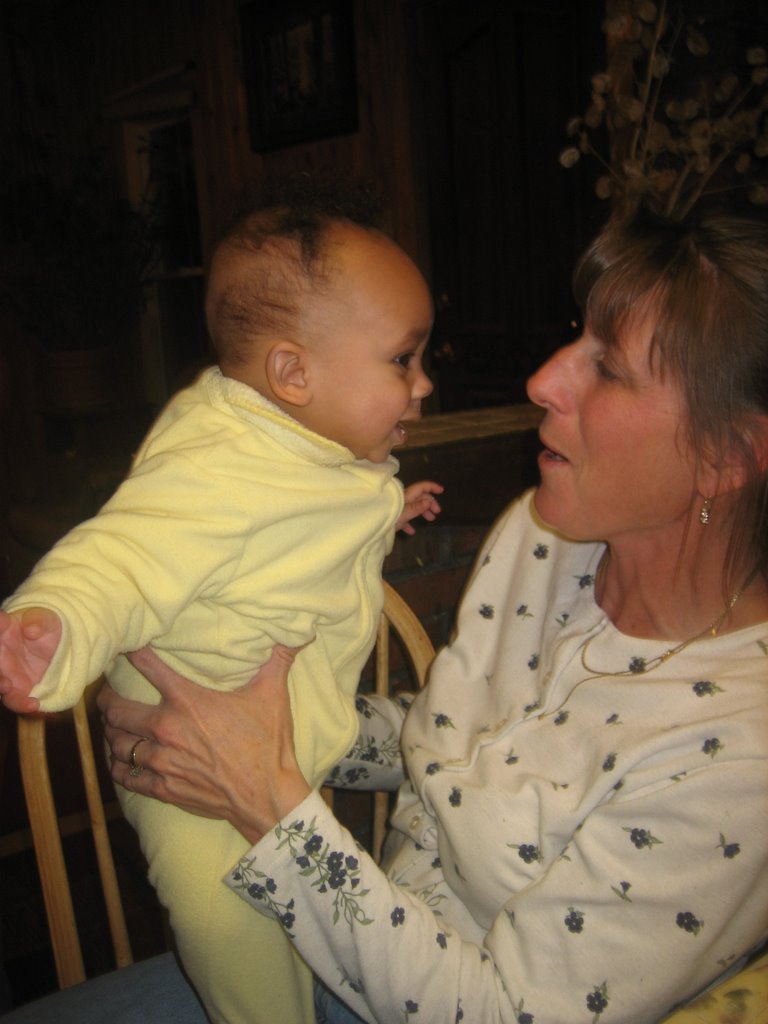
Everyone who sees how bonded we are to the babies in our foster care always asks THE question: "Is it hard when they leave?" The answer, of course, is YES! But the bonding is what the babies need in order to be socialized human beings who can bond with people throughout their lifetimes. We love them as though they are our own and as though they are going to be with us throughout their childhoods. We know, however, that the odds are not very high that that will be the case. We can only hope that other persons involved with their cases will step forward and make sure the children are protected from further abuse and neglect.
Saturday, May 20, 2006
Sand Castles in the Air
"It is one thing for people to build sand castles in the air, but it is quite another for them to live in them!" Those are the words a foster parent used to describe the unrealistic advice she was getting from the social worker assigned by the foster care agency to manage the case of the child who was placed in her home. Social workers, anxious to be accorded status in the community, may describe themselves as "clinicians," hoping that the public will somehow connect them with the unquestioned authority enjoyed by the medical profession. In fact, when it comes to foster parenting, the knowledge base of the social work professon sometimes is little more than sand castles in the air.
Foster parents are generally people who have had success raising their own children. Success meant having high expectations of their children, and the children living up to or surpassing those expectations. Social workers working in child abuse or neglect settings are often people who have never been parents. When they teach the foster parents how to become "therapeutic" foster parents, they often teach them not to do the things that made them successful with their own children! When the foster parent tries to discipline a child by holding him accountable for his deeds, the social worker says, "no, no, no,: try to understand the underlying reason why the child misbehaved! Help him to understand his feelings."
So Billy is angry that his mother has missed six visits in a row, and then she finally shows up as if nothing had happened. Billy then comes home and expresses his rage at this outrageous behavior of his mom by hitting the dog or biting a foster sibling. What he needs at that point is a CONSEQUENCE strong enough to make him think twice before hurting some animal or person the next time he feels angry!
The social worker, however, cautions the foster parent never to raise her voice in anger at a child. What if the foster child is hurting a baby? I'll answer that one for you. You say the name of the offending child, and then follow ugently with the word NO! or, STOP! You let the child know that you say what you mean, and mean what you say, and you do not plan to keep repeating yourself to someone who chooses to ignore or openly defy you. If he cannot handle the freedom, he will have to lose it for a while, and then earn it back.
While foster parents are supposed to lower their expectations of the child, the system may have incredibly low expectations of the child's birthparents. Basically all they have to do in many cases is show up for visits, not abuse the child during the visits, then show up for court.
If someone has a different point of view than the "clinical" social worker, the social worker may proceed to analyze free of charge why there must be something in the person's personal history that explains why they lack the wisdom of the all-knowing social worker. This condescending attitude is hated by foster parents, and especially by adolescent foster children. We had a twelve-year-old girl, who was placed in our home after her mother died from overdosing on illegal drugs and alcohol. After she had been with us for a while, I asked the child what her experience had been with social workers, since she had been in seven different foster homes while waiting for the system to decide on her future. Her answer? "Caseworkers just mess with my life. They are unwanted strangers barging into my life. I don't like any of them. None of them really took the time to get to know me." This sad statement came from a child who was truly worth getting to know. Fortunately, a wonderful, dependable family with a solid rural American lifestyle, came forth, made several visits to our house, and adopted this young lady.
Foster parents are generally people who have had success raising their own children. Success meant having high expectations of their children, and the children living up to or surpassing those expectations. Social workers working in child abuse or neglect settings are often people who have never been parents. When they teach the foster parents how to become "therapeutic" foster parents, they often teach them not to do the things that made them successful with their own children! When the foster parent tries to discipline a child by holding him accountable for his deeds, the social worker says, "no, no, no,: try to understand the underlying reason why the child misbehaved! Help him to understand his feelings."
So Billy is angry that his mother has missed six visits in a row, and then she finally shows up as if nothing had happened. Billy then comes home and expresses his rage at this outrageous behavior of his mom by hitting the dog or biting a foster sibling. What he needs at that point is a CONSEQUENCE strong enough to make him think twice before hurting some animal or person the next time he feels angry!
The social worker, however, cautions the foster parent never to raise her voice in anger at a child. What if the foster child is hurting a baby? I'll answer that one for you. You say the name of the offending child, and then follow ugently with the word NO! or, STOP! You let the child know that you say what you mean, and mean what you say, and you do not plan to keep repeating yourself to someone who chooses to ignore or openly defy you. If he cannot handle the freedom, he will have to lose it for a while, and then earn it back.
While foster parents are supposed to lower their expectations of the child, the system may have incredibly low expectations of the child's birthparents. Basically all they have to do in many cases is show up for visits, not abuse the child during the visits, then show up for court.
If someone has a different point of view than the "clinical" social worker, the social worker may proceed to analyze free of charge why there must be something in the person's personal history that explains why they lack the wisdom of the all-knowing social worker. This condescending attitude is hated by foster parents, and especially by adolescent foster children. We had a twelve-year-old girl, who was placed in our home after her mother died from overdosing on illegal drugs and alcohol. After she had been with us for a while, I asked the child what her experience had been with social workers, since she had been in seven different foster homes while waiting for the system to decide on her future. Her answer? "Caseworkers just mess with my life. They are unwanted strangers barging into my life. I don't like any of them. None of them really took the time to get to know me." This sad statement came from a child who was truly worth getting to know. Fortunately, a wonderful, dependable family with a solid rural American lifestyle, came forth, made several visits to our house, and adopted this young lady.
Thursday, May 18, 2006
Hard Realities
This week we heard from a mom, who along with her husband, is adopting a child who lived with us in foster care for one year. For confidentiality purposes, we'll call him Billy. His new mom sent us pictures, and told us that the adoption process is close to being concluded. This is wonderful news. His new parents are wonderful. The dad is a military recruiter and chef. The mom is a computer whiz, who stays at home with Billy during the day. They are mature adults with conservative beliefs and values. They are just exactly what Billy needs.
Billy is a charming, good-looking three-and-one-half-year-old. He was eighteen months old when he came to live with us. He had been raising himself. His mother was a teenager who worked at a fast food restaurant. The police found him hanging out at a convenience store with his brother, who was two years older than Billy. Billy knew a lot about violence. When he got in a fight, he fought to kill, and used whatever weapon he could. His favorite weapon was his teeth.
Billy misinterpreted kindness as weakness. Billy received the most kindness from my wife Colleen and my son Jon, who was then four-years-old. Yet, Jon was most often the target of Billy's biting, and Colleen was the target of Billy's sand-in-the-face throws and most vociferous temper tantrums. Once a neglected child gets a whiff of what it is like to be nurtured, he may want that nurturing non-stop. The foster parent must then teach the child that in the real world people over the age of eighteen months do not get nurtured non-stop! The fact that he did not get that nurturing as an infant does not change that reality.
The children foster parents take into their homes are in many ways similar to the foster parents own children. Some are physically very attractive, as is Billy, and to the untrained eye may seem to be "adorable." But, because of their unique experiences being neglected and/or abused, they will bring with them some behaviors that the foster parents never saw in their own children. Add that to the fact that the bond is not the same as the bond they have with their own biological children, and you may have a situation that can test the patience of the best foster parents.
ABANDONMENT
Foster parents may get to reap what is sown by birthparents: the child's deep-seated anger and resentment that his needs were not taken care of in those crucial first eighteen months. As frightening as it is to see the depth of rage the child may exhibit, it is equally heartbreaking and sad. After missing five straight weeks of scheduled visits with Billy, his biological mother finally showed up for a visit with Billy and his older brother, whom we shall call Jed. Jed had always rejected Billy. They were placed in two different foster homes because of their extreme history of violence with each other.
Jed's foster mother, a single woman aged 63, was a former civil rights attorney, and tough as nails. She was terrific at the core job of a foster parent who has a child like Jed: civilizing him! She made him give Billy a kiss, while we all waited in the waiting room for the biological mom, who was late. When the mom comes into the visiting room waiting area, Jed's foster mom encouraged him to go give his mom a hug.
After the visit I encouraged Billy to give his mom one more hug, which he did, but then showed no sorrow at leaving her, because he now had parents who were there for him every hour of every day. When we arrived home after the visit, he saw our truck and got excited, because Colleen is usually driving it, and that meant that she was probably home. He runs to her and holds out his arms for her to pick him up. He exclaims, "Mama!" Colleen has successfully created a bond, not to mention the fact that this child who came to us speaking no words is now speaking words with a flourish.
When Billy first came to us, he would go to anyone, from teen girls to adult women, but was always very frightened of men. The man with whom his biologiccal mother was living had a record for violent crimes, and we can only guess what kinds of violence Billy was exposed to when he lived with his mom. He bonded much more rapidly with Colleen than he did with me. When he first came to us I had to be very protective of my own children, whom Billy was biting several times a day. Colleen was often working outside the home. I had many stern face-to-face talks with Billy about "NO BITING!" He kept his distance from me the first few weeks. Soon, though, he learned that he could get his nurturing from us, and he no longer looked for it from strangers.
Nevertheless, the next week after the visit revealed the depth of Billy's anger. He kicked and bit other children, and spit at Colleen (transferring the anger he felt toward his own mom). He picked up objects and hit other objects as hard as he could. He headed toward other people with the weapons in his hands. No doubt about it: if he had the right weapon and the right strength, he would have been homocidal. Each time he abused someone, he earned a time out; throughout which he screamed bloody murder.
We will never forget the looks on the face of another child, a six-year-old girl we shall call Ginny, each time we took her to a visit, waited the required fifteen minutes, and then were told by the visitation supervisor that there would be no visit because Ginny's mother did not show up or call. The mother, still mired in her substance abuse addictions, loved Ginny, but not nearly so much as she loved her own narcissistic image in the mirror. Ginny's father loved her, too, but the mother had bad-mouthed him to the naive caseworker, so instead of immediately pursuing the father as an option for Ginny, the initial months of casework focus were to reunify Ginny with a mother still in the throes of alcoholism. Meanwhile Ginny got her hopes up time and again, and time and again the mother thought only of herself and her booze.
They don't teach caseworkers about these crushing realities faced by abused and neglected children. The graduate schools of social work are dominated by left-wing faculty members who hold views idealizing the "poor," and making endless excuses for irresponsible behavior. Feminism is also rampant on these faculties, so it rarely seems to occur to these social workers who graduate from these schools that a father may be an appropriate choice to parent his child. Ginny eventually was placed with her father, who had been calling us long distance from the East coast regularly to talk to his daughter. We hammered the point home to the caseworker, who finally woke up.
If the system does not intervene and truly protect a child in the crucial first twelve to eighteen months of the child's life, the child is likely to have had many reinforcing experiences teaching her that her adult caretakers cannot be trusted. The more of those experiences that pile up in her life, the more difficult it will be for the child to learn to trust an adult who really is there to care for the child. She may decide she must fend for herself, thereby becoming perhaps increasingly manipulative and narcissistic, putting herself above all others at all times. This can lead to her seeing other people as objects to be manipulated, rather than as fellow humans with whom she can interact, learn from, and appreciate.
Billy is a charming, good-looking three-and-one-half-year-old. He was eighteen months old when he came to live with us. He had been raising himself. His mother was a teenager who worked at a fast food restaurant. The police found him hanging out at a convenience store with his brother, who was two years older than Billy. Billy knew a lot about violence. When he got in a fight, he fought to kill, and used whatever weapon he could. His favorite weapon was his teeth.
Billy misinterpreted kindness as weakness. Billy received the most kindness from my wife Colleen and my son Jon, who was then four-years-old. Yet, Jon was most often the target of Billy's biting, and Colleen was the target of Billy's sand-in-the-face throws and most vociferous temper tantrums. Once a neglected child gets a whiff of what it is like to be nurtured, he may want that nurturing non-stop. The foster parent must then teach the child that in the real world people over the age of eighteen months do not get nurtured non-stop! The fact that he did not get that nurturing as an infant does not change that reality.
The children foster parents take into their homes are in many ways similar to the foster parents own children. Some are physically very attractive, as is Billy, and to the untrained eye may seem to be "adorable." But, because of their unique experiences being neglected and/or abused, they will bring with them some behaviors that the foster parents never saw in their own children. Add that to the fact that the bond is not the same as the bond they have with their own biological children, and you may have a situation that can test the patience of the best foster parents.
ABANDONMENT
Foster parents may get to reap what is sown by birthparents: the child's deep-seated anger and resentment that his needs were not taken care of in those crucial first eighteen months. As frightening as it is to see the depth of rage the child may exhibit, it is equally heartbreaking and sad. After missing five straight weeks of scheduled visits with Billy, his biological mother finally showed up for a visit with Billy and his older brother, whom we shall call Jed. Jed had always rejected Billy. They were placed in two different foster homes because of their extreme history of violence with each other.
Jed's foster mother, a single woman aged 63, was a former civil rights attorney, and tough as nails. She was terrific at the core job of a foster parent who has a child like Jed: civilizing him! She made him give Billy a kiss, while we all waited in the waiting room for the biological mom, who was late. When the mom comes into the visiting room waiting area, Jed's foster mom encouraged him to go give his mom a hug.
After the visit I encouraged Billy to give his mom one more hug, which he did, but then showed no sorrow at leaving her, because he now had parents who were there for him every hour of every day. When we arrived home after the visit, he saw our truck and got excited, because Colleen is usually driving it, and that meant that she was probably home. He runs to her and holds out his arms for her to pick him up. He exclaims, "Mama!" Colleen has successfully created a bond, not to mention the fact that this child who came to us speaking no words is now speaking words with a flourish.
When Billy first came to us, he would go to anyone, from teen girls to adult women, but was always very frightened of men. The man with whom his biologiccal mother was living had a record for violent crimes, and we can only guess what kinds of violence Billy was exposed to when he lived with his mom. He bonded much more rapidly with Colleen than he did with me. When he first came to us I had to be very protective of my own children, whom Billy was biting several times a day. Colleen was often working outside the home. I had many stern face-to-face talks with Billy about "NO BITING!" He kept his distance from me the first few weeks. Soon, though, he learned that he could get his nurturing from us, and he no longer looked for it from strangers.
Nevertheless, the next week after the visit revealed the depth of Billy's anger. He kicked and bit other children, and spit at Colleen (transferring the anger he felt toward his own mom). He picked up objects and hit other objects as hard as he could. He headed toward other people with the weapons in his hands. No doubt about it: if he had the right weapon and the right strength, he would have been homocidal. Each time he abused someone, he earned a time out; throughout which he screamed bloody murder.
We will never forget the looks on the face of another child, a six-year-old girl we shall call Ginny, each time we took her to a visit, waited the required fifteen minutes, and then were told by the visitation supervisor that there would be no visit because Ginny's mother did not show up or call. The mother, still mired in her substance abuse addictions, loved Ginny, but not nearly so much as she loved her own narcissistic image in the mirror. Ginny's father loved her, too, but the mother had bad-mouthed him to the naive caseworker, so instead of immediately pursuing the father as an option for Ginny, the initial months of casework focus were to reunify Ginny with a mother still in the throes of alcoholism. Meanwhile Ginny got her hopes up time and again, and time and again the mother thought only of herself and her booze.
They don't teach caseworkers about these crushing realities faced by abused and neglected children. The graduate schools of social work are dominated by left-wing faculty members who hold views idealizing the "poor," and making endless excuses for irresponsible behavior. Feminism is also rampant on these faculties, so it rarely seems to occur to these social workers who graduate from these schools that a father may be an appropriate choice to parent his child. Ginny eventually was placed with her father, who had been calling us long distance from the East coast regularly to talk to his daughter. We hammered the point home to the caseworker, who finally woke up.
If the system does not intervene and truly protect a child in the crucial first twelve to eighteen months of the child's life, the child is likely to have had many reinforcing experiences teaching her that her adult caretakers cannot be trusted. The more of those experiences that pile up in her life, the more difficult it will be for the child to learn to trust an adult who really is there to care for the child. She may decide she must fend for herself, thereby becoming perhaps increasingly manipulative and narcissistic, putting herself above all others at all times. This can lead to her seeing other people as objects to be manipulated, rather than as fellow humans with whom she can interact, learn from, and appreciate.
In the Best Interest of the Child, or Move the Case Along and Return the Baby to a Parent to Avoid Hassles and Complications?
Today we took our foster baby to the doctor. The doctor suspects shaken baby syndrome or meth use during pregnancy. He ordered a complete neurological workup at Childrens Hospital in Denver, a place where they do have expertise in diagnosing child abuse and neglect. We had previously gotten orders for the baby to get physical therapy weekly and occupational therapy twice a week in our home. When we told the caseworker about these professionals coming to help the baby in our home, she made absolutely no response whatsoever. It will be interesting to see how she responds to this latest development. My guess is she will show no interest.
Looking Out for Number One
Just as the main function of a bureaucracy is to perpetuate itself permanently, so the main function of the bureaucrat is to cover his ass in such a way as to keep or improve his position in the bureaucracy. One who is trying to protect children must always keep those truths in mind.
Wednesday, May 17, 2006
Protecting Children, or Pretending to Protect Children?
After a career as a child protection social worker, I have been doing foster care with my wife for the last three years. We have taken in children of all ages, but in the last year we have specialized in babies. We made that choice because we found that our own six children are not threatened so much by babies as they are of children closer in age to themselves. Also because we like to adopt, so we take children who someone in the system believes will become available for adoption, because it appears that the parental rights are headed for termination.
We currently have a precious little girl who is now 6 and one-half months. She has been with us for two and one-half months. Her mother is an exotic dancer with additional experience in the cooking of crystal meth. Her father is a man with a long criminal history. She was removed from the home after her father was arrested for domestic violence and her mother received a broken nose from the baby's macho dad.
After going through the intake process, which invoved several caseworkers, she was assigned to an "on-going" caseworker. That caseworker and the lawyer (Guardian ad Litem) appointed to make sure that the case served the best interests of the child, actually took their charge seriously. They were determined to see changes in mom along the lines of sobriety and an ability to provide safe living conditions for her daughter. Likewise, they were determined that the father would show evidence of learning that beating the crap out of mom was a stupid way to show his manhood.
Suddenly, the caseworker quit and decided to go home and take care of her own babies.
A different caseworker received many of her cases, plus some from another worker who had quit. Gone was the determination to protect the innocent baby. The new worker appears to be a go along and get along type person. A caseworker who truly insists on protecting children faces many obstacles and conflicts. The way to advance in the system is not to make many waves. The system is not about protecting children. The system is about pretending to protect children, while making sure that not too much money is spent on protecting the child and providing needed services to the child to bring her up to where she needs to be developmentally.
So now we have a foster family, each of whose eight members adores and is bonded to the baby, a baby who is wonderfully bonded to each member of the foster family, and a Guardian ad Litem, who we hope is still committed to protecting this baby. We shall see what we shall see.
We currently have a precious little girl who is now 6 and one-half months. She has been with us for two and one-half months. Her mother is an exotic dancer with additional experience in the cooking of crystal meth. Her father is a man with a long criminal history. She was removed from the home after her father was arrested for domestic violence and her mother received a broken nose from the baby's macho dad.
After going through the intake process, which invoved several caseworkers, she was assigned to an "on-going" caseworker. That caseworker and the lawyer (Guardian ad Litem) appointed to make sure that the case served the best interests of the child, actually took their charge seriously. They were determined to see changes in mom along the lines of sobriety and an ability to provide safe living conditions for her daughter. Likewise, they were determined that the father would show evidence of learning that beating the crap out of mom was a stupid way to show his manhood.
Suddenly, the caseworker quit and decided to go home and take care of her own babies.
A different caseworker received many of her cases, plus some from another worker who had quit. Gone was the determination to protect the innocent baby. The new worker appears to be a go along and get along type person. A caseworker who truly insists on protecting children faces many obstacles and conflicts. The way to advance in the system is not to make many waves. The system is not about protecting children. The system is about pretending to protect children, while making sure that not too much money is spent on protecting the child and providing needed services to the child to bring her up to where she needs to be developmentally.
So now we have a foster family, each of whose eight members adores and is bonded to the baby, a baby who is wonderfully bonded to each member of the foster family, and a Guardian ad Litem, who we hope is still committed to protecting this baby. We shall see what we shall see.
Tuesday, May 16, 2006
Finding the Kingdom of Heaven

My wife Colleen told our children that God wants us to search for the Kingdom of Heaven. Colleen asked our youngest child, two-year-old Sara Jane, if she has been looking for the Kingdom of Heaven. Sara said she knew where it is. "It's in the back yard Mama."
Monday, April 17, 2006
Does God Have a Wife? Why Does He Live up in Heaven?

Four-year-old Greg wanted to know more about God again this morning. Greg thinks about God a lot. "Does God have a wife?" "If God was here on earth, could He see Heaven?" "Why does God live up in Heaven?" "Does God know everything?" "Is Satan God's worst enemy?" Even though I rarely have an answer for Greg, it is a joy to be with him and see how his mind is constantly working to figure out life's mysteries.
Sunday, April 16, 2006
Faith and the Easter Bunny

Six-year-old Jon asked his mother this morning, "What time did the Easter Bunny come last night?" "I don't know, I must have been asleep," was the reply. "Then, how do you know he came?" "Because he has come every year since I was a little girl, and I just have faith that he will come every year on Easter." With that explanation apparently satisfying his curiousity, the questioner was ready to begin his egg-hunting quest.
Thursday, April 06, 2006
Political Discussion in Public School Classrooms
I cannot believe reports that people like David Horowitz and John Andrews would want to write legislation banning political discussions in classrooms. I think that students should be encouraged to learn all points of view on current events and political hot topics. I would personally love to be such a teacher. The answer to the Ward Churchills and Jay Bennishes is not to ban their points of view, but to encourage students to form their own opinions by being challenged to do independent research, share ideas with each other, and then develop and defend their positions with facts. The teacher would also have the important responsibility of creating a safe environment in which students would realize that they could raise their questions and state their views without fear of being ostracized or mocked.
Wednesday, March 08, 2006
Moving?

We currently have our house up for sale, and are looking at properties that will allow a little more elbow room for our family.
Today my four-year-old son informed me that he does not want to move. Moreover, he has thought about what he will do if we persist in our plans. "I am going to live down the street here in Golden," he calmly informed me. I asked, "With whom are you going to live?" He answered, "I am going to buy a house and get some kids." I asked, "How are you going to get some kids?" "The mom of the house is going to get the babies out of her tummy, and then they will get older and they will be kids."
Monday, March 06, 2006
The Gospel According to My Four-Year-Old
Today I walked past my four-year-old son Greg, when I overheard him say, "Hello, God?" I slowed my pace to hear how the conversation would go. Greg informed God, "I have killed some bad guys. Can you come down and get them and take them up to Heaven?" God apparently answered this prayer, because that was the end of the conversation.
Saturday, February 18, 2006
Saturday, February 11, 2006
Can You Say Dhimmitude?
Kudos to the Rocky Mountain News for reprinting one of the Danish cartoons. Diana West has an op-ed in yesterday's Washington Times explaining the meaning of the word Dhimmitude. The way things are going, many more people around the world are going to have to get used to spelling and pronouncing this word, which is actually not a new word at all.
Tuesday, January 31, 2006
Who is Meanspirited, the Columnist or the Candidate?
Today Rocky Mountain News Columnist Mike Littwin writes about spending some time traveling with undeclared presidential candidate Tom Tancredo on Tancredo's RV called "Secure America Now". Littwin is one of the most virulent ridiculers of Tancredo's anti illegal immigration campaign. On the trip Tancredo shares with Littwin very personal truths about his childhood. Tom does not have access in his memory to many happy moments from his childhood. His father was an alcoholic who was apparently quite mean at times.
Littwin gleefully now has his story. He thinks he has Tancredo all figured out. "Wall off the problem. Keep down the demons. Shout down those who have no voice. If you do get heard, then you are surprised. Maybe if you believed someone was going to pay attention, you might have thought harder about what it was you were going to say."
Littwin should heed his own words. Though he tries to portray Tancredo as meanspirited, it is he who is the meanspirited one. As Tancredo's mother lies dying in a hospice in Colorado, he shares deeply personal emotions with Littwin, who then misuses those very personal confidences to attack this very gracious man who sincerely wants to secure the boundaries of America, a country he dearly loves. You just do not get any lower than Littwin.
Littwin gleefully now has his story. He thinks he has Tancredo all figured out. "Wall off the problem. Keep down the demons. Shout down those who have no voice. If you do get heard, then you are surprised. Maybe if you believed someone was going to pay attention, you might have thought harder about what it was you were going to say."
Littwin should heed his own words. Though he tries to portray Tancredo as meanspirited, it is he who is the meanspirited one. As Tancredo's mother lies dying in a hospice in Colorado, he shares deeply personal emotions with Littwin, who then misuses those very personal confidences to attack this very gracious man who sincerely wants to secure the boundaries of America, a country he dearly loves. You just do not get any lower than Littwin.
Subscribe to:
Posts (Atom)